
I didn’t start investing with a detailed financial plan.
In 2017, I was simply a young chemical engineer who had just started earning and was trying to figure out what to do with my first salary.
I didn’t know much about mutual funds. I didn’t know how markets worked. I just knew that I wanted to start investing.
And that small decision eventually changed the way I looked at money.
It started with a friend’s invitation
I graduated in 2017 and got my first job in my hometown, Ankleshwar.
Before I received my first salary, a friend asked me to attend a mutual fund session. Until then, I had never really paid much attention to investing.
My father was already investing in mutual funds, but I had never been particularly interested in it, so we had never really discussed it.
After attending the session, I came home and asked my father about mutual funds. He told me that he was already investing and felt it was a good way to invest for the long term.
That conversation gave me the confidence to take my first step.
y take-home salary at the time was around ₹12,500 per month. The same person who had conducted the mutual fund session I attended with my friend asked about my salary and suggested starting with a ₹3,000 monthly SIP.
I agreed.
I was living with my parents, so the amount was manageable. I also trusted the distributor because he was knowledgeable and was already handling my friends investments.
So, from my very first salary, I started a ₹3,000 SIP in a flexi-cap mutual fund.
I didn’t know much about investing at that point.
But I understood one thing:
This was a long-term investment. It would take time.
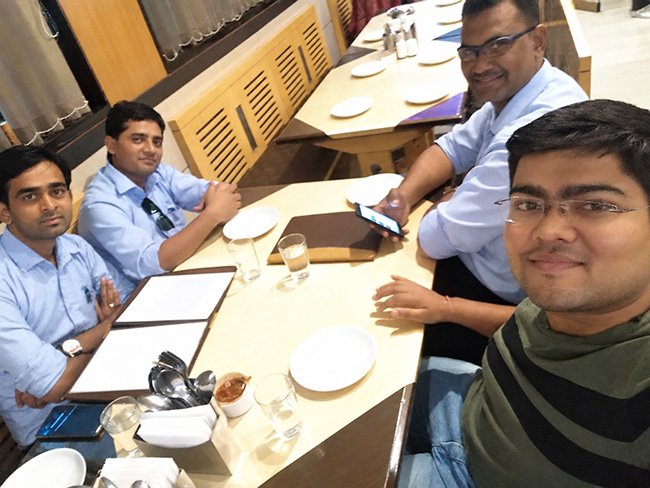
An early glimpse of my working days, around the time I started my investment journey.
Then came two years of negative returns
I wasn’t checking my investment frequently.
I knew it was a long-term investment, so I wasn’t expecting quick results.
But for almost two years, my investment remained in negative territory.
That was different when it was your own money.
I knew markets could go up and down. I knew investing was supposed to be for the long term. But seeing my first investment remain negative for such a long time still made me worried.
I didn’t stop my SIP, but I definitely had doubts.
Then life gave me another reason to change my plans.
The investment I almost left behind
After about two years, I was planning to move to Canada.
Around that time, my mutual fund investment had recovered and was showing roughly 20–25% gains overall. I wasn’t thinking about CAGR or analysing the return in detail. I was simply happy that my investment had finally become positive.
Because I was planning to move abroad, I decided to withdraw the investment.
But I didn’t end up moving to Canada.
So I approached the mutual fund distributor who was handling my father’s investments. He helped me start investing again, and this time I increased my SIP to ₹7,000 per month.
Looking back, this was when my real investment journey started.
I started learning about my own investments
Until then, I was mostly investing based on the guidance I received.
Gradually, that changed.
I started reading about mutual funds myself. I began watching YouTube videos and trying to understand what was actually happening with my money.
Then COVID came.
And that’s when investing became real for me.
COVID changed the way I looked at investing
My portfolio fell significantly during the COVID market crash.
And honestly, I was scared.
It is easy to say you are a long-term investor when the market is going up.
It feels very different when you open your portfolio and see a large fall in value.
At that time, I spoke to my mutual fund distributor.
He showed me what had happened during the 2008 market fall and explained how the market had recovered afterwards. He also reminded me that we had started the SIP for the long term.
One thing he said stayed with me:
If we started this SIP for the long term, why are we worrying after just two years?
That made me look at the situation differently.
Instead of only seeing a falling portfolio value, I started thinking about the units my SIP was accumulating during the market fall.
I decided to stay invested.
I also invested ₹20,000 as a lump sum during the market fall based on his recommendation.
I wasn’t suddenly an expert investor.
But I was beginning to understand what it actually meant to stay invested through a difficult market.
The recovery changed my confidence
Eventually, the market recovered.
My investments recovered too.
As I watched my portfolio grow after the COVID fall, my confidence in investing grew with it.
This time, I wasn’t simply hearing that markets recover.
I had experienced the fall myself.
I had felt the fear.
I had stayed invested.
And then I experienced the recovery.
That experience changed my approach. I started increasing my SIP and investing more as my income grew.
My investment journey was no longer just about putting money into a mutual fund every month. I had started taking a genuine interest in understanding my investments.
The role of a trusted distributor
When I look back, I also realize how important the right guidance was in the early part of my journey.
When I started investing, I didn’t know how to evaluate mutual funds or what I should do when the market fell sharply.
I was fortunate to have a mutual fund distributor whom I trusted.
He helped me get started, helped me stay calm during the COVID crash, showed me the historical market recovery, and helped me understand why staying invested mattered.
For me, it was never about blindly following someone.
It was about having someone knowledgeable whom I could trust and talk to when I had doubts.
That kind of relationship can be especially valuable when you are starting your investment journey and haven’t yet developed the confidence to make sense of every market movement yourself.
Looking back at my first ₹3,000 SIP
When I look at that first ₹3,000 SIP today, it feels very different from how it felt in 2017.
At the time, it was simply a decision I made with my first salary.
I didn’t know that I would watch my investment remain negative for two years.
I didn’t know I would withdraw it because I thought I was moving to Canada.
I didn’t know I would start again with ₹7,000.
And I certainly didn’t know that a few years later, I would watch my portfolio fall during COVID and have to decide whether to stay invested.
But all of those experiences became part of my journey.
I didn’t start investing with everything figured out.
I simply started.
And over the years, the market, my experiences, and the people who guided me helped me understand what being a long-term investor really means.
My investment journey is still going on.
And when I think about that first ₹3,000 SIP, I realize that its biggest value wasn’t just the money I invested.
It was that it got me started.
I also realize that investing is not something you need to have completely figured out before you begin. You learn as you go. You experience market cycles, make decisions, sometimes make mistakes, and gradually become a better investor.
My own journey started with a small SIP, a conversation with my father, and the guidance of someone I trusted.
Years later, those experiences have shaped the way I think about investing and the way I approach helping others with their investments.
I still have a lot to learn.
But one thing I know for sure:
You don’t need to know everything to start investing. You just need to take the first step, and then keep learning along the way.